
How does The Travelers Companies, Inc. reach buyers through agents and brokers?
Route to market matters because P&C buyers want fast quotes and claims trust. In 2025, agent and broker access still shapes bind rates and renewals, so trust can turn into repeat premium. Travelers Companies Value Chain Analysis
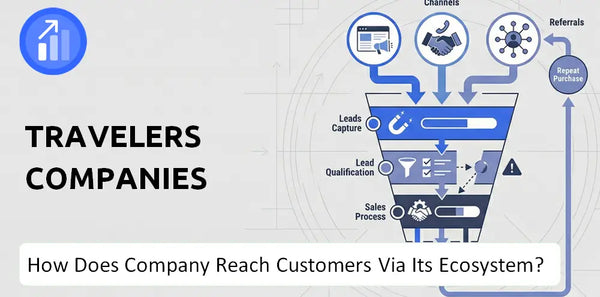
Strong carrier reputation helps agents place more risks and defend renewals. That channel pull can lower acquisition friction and lift demand across core lines.
Who Does Travelers Companies Sell To and Through Which Channels?
Travelers Companies sells to businesses, government entities, associations, and individuals. Most insurance sales move through independent agents and brokers, while specialty brokers and account teams handle complex bond and specialty placements.

Travelers Companies main route to market
Travelers Companies depends on intermediated distribution, not direct selling, to reach most buyers. That setup shapes how brand trust turns into insurance demand generation and renewal volume.
- Business buyers drive the largest premium base
- Independent agents and brokers lead access
- Agents control the first customer conversation
- Trust matters at quote and renewal
Travelers Companies serves commercial accounts through Business Insurance and Bond & Specialty Insurance, then households through Personal Insurance. In practice, the Travelers brand reputation has to travel through agents, brokers, and account teams before it becomes a quote, a bound policy, or a renewal.
That makes customer trust in insurance central to how Travelers Companies builds customer trust and how brand trust drives insurance sales. For commercial lines, trusted intermediaries help explain coverage, price, and risk terms. For personal lines, the same agency model helps homeowners and auto buyers compare options and stay with the carrier at renewal. See the wider channel view in Ecosystem Growth Outlook of Travelers Companies Company.
Commercial demand is more complex because buyers are not just purchasing a policy; they are buying risk transfer, claims service, and placement advice. That is why Travelers Companies commercial insurance growth depends on broker relationships, specialty expertise, and strong service execution, especially where coverage structure and underwriting detail matter.
In personal lines, the route is simpler but still mediated. Travelers Companies personal insurance demand comes through agents who influence first purchase, bundling, and retention, so Travelers Companies customer loyalty strategy depends on keeping that channel confident in price, service, and claims handling. This is also where how reputation affects insurance purchase decisions shows up fast.
Travelers Companies SWOT Analysis
- Organized to Save Time on Analysis
- Fully Customizable
- Editable in Excel & Word
- Professional Formatting
- Investor-Ready Format

How Does Travelers Companies Reach the Market Through Partners, Platforms, or Distribution?
Travelers Companies reaches the market mainly through independent agents and brokers, not direct consumer ads. That route makes brand trust visible at the point of sale, where placement, advice, and renewal decisions are made.
 Independent agents are the strongest access point
Independent agents and brokers control a large share of commercial insurance sales flow, so they shape how Travelers Companies gets quoted and placed. This is where how brand trust drives insurance sales becomes practical: a strong Travelers brand reputation helps keep the carrier on the short list when agents compare terms, appetite, and service.
In property and casualty insurance, why trust matters in insurance buying decisions is simple. Buyers want a carrier that will price fairly, respond fast, and pay claims, and agents steer that choice.
The link between Ecosystem Principles of Travelers Companies Company and market access is the strength of that intermediary network.
Digital tools make the route to market faster
Travelers Companies uses digital quoting, underwriting, and servicing tools to help agents submit risks, compare options, bind coverage, and handle policy changes. That matters because faster workflows lift insurance demand generation and support Travelers Companies commercial insurance growth.
The structural dependency is clear: Travelers Companies does not fully own the customer relationship, so partner loyalty and system ease affect how often the brand shows up in new business and renewals. That is a core part of Travelers Companies customer loyalty strategy and insurance customer retention strategies.
Across the broader insurance sales process, how insurers turn brand equity into revenue depends on making the partner experience simple enough that agents keep using the carrier.
Travelers Companies also reaches selected personal lines through agency distribution, where Travelers Companies personal insurance demand is tied to agent recommendations and local market fit. The result is a channel model built on customer trust in insurance, carrier service, and steady partner access rather than mass direct selling.
In 2024, Travelers Companies reported net written premiums of over $40 billion, showing how a trust-based distribution model can scale. That scale reflects Travelers Companies brand reputation and sales growth, especially in commercial lines where agent choice is a major gatekeeper.
Travelers Companies marketing strategy is less about broad consumer reach and more about staying easy to quote, easy to place, and easy to renew. That is how Travelers Companies attracts new policyholders and keeps existing ones in a market where reputation affects insurance purchase decisions.
Travelers Companies Value Chain Analysis
- Structured to Support Better Decisions
- Effortlessly Communicate Your Business Strategy
- Investor-Ready Format
- 100% Editable and Customizable
- Clear and Structured Layout

How Does Travelers Companies Convert Ecosystem Access Into Revenue?
Travelers Companies turns ecosystem access into insurance sales by using its agent network, renewal book, and cross-sell relationships to convert quotes into bound policies and then into retained premium. That is where brand trust matters: it lowers friction at placement, supports renewal, and helps the Travelers brand reputation move from one policy to broader account penetration.
| Access Channel | How It Converts to Revenue | Why It Matters |
|---|---|---|
| Independent agents and brokers | Agents place submissions, Travelers quotes risks, and wins become written premium. | This is a core path for how Travelers Companies attracts new policyholders. |
| Renewal book | Renewals keep premium in force and reduce the cost of replacing business. | Retention is the main driver of stable insurance demand generation over time. |
| Multi-line account relationships | One line of cover can expand into more policies across Business Insurance, Bond & Specialty Insurance, and Personal Insurance. | This is how brand trust drives insurance sales and lifts account value. |
Of the three, the renewal book looks most economically important because it converts existing policies into recurring premium with lower acquisition drag. That fits Travelers Companies customer loyalty strategy and insurance customer retention strategies, since every retained account can support future cross-sell and better pricing discipline. In the latest reported 2024 results, Travelers Companies produced 43.4 billion in net written premiums and a 90.3 combined ratio, which shows how how insurers turn brand equity into revenue while keeping underwriting profitable. Read more in the Value Chain Role of Travelers Companies Company view. Brand trust in the property and casualty insurance industry still matters because customer trust in insurance affects how reputation affects insurance purchase decisions and how Travelers Companies commercial insurance growth and Travelers Companies personal insurance demand compound over time.
Travelers Companies Business Model Canvas
- Clean, Modern, and Easy to Present
- No Research Needed – Save Hours of Work
- Built by Experts, Trusted by Consultants
- Instant Download, Ready to Use
- 100% Editable, Fully Customizable

What Shapes Travelers Companies's Route-to-Market Outlook?
Travelers Companies route-to-market outlook is shaped by brand trust, strong independent-agent reach, and broad product choice, but it is weakened by catastrophe exposure, litigation severity, and price pressure in crowded lines. In 2025 and 2026, access to buyers will stay strongest when agents see reliable claims handling, steady underwriting, and easy placement. See the Ecosystem Competition of Travelers Companies Company for channel context.
Strongest access edge: agent trust and easy placement
Travelers Companies benefits when agents view it as a stable carrier with clear appetite and fast claims follow-through. That supports insurance sales because agents can place more risks with less friction, which helps both new business and renewals.
The Travelers brand reputation matters most in lines where buyers and agents compare service, not just price. That is why trust matters in insurance buying decisions and why how Travelers Companies builds customer trust is central to how it keeps demand flowing.
Key future access risk: loss volatility and channel pressure
Catastrophe losses, litigation severity, and loss-cost inflation can make agents more selective about where they place accounts. If pricing lags claims trends, distribution partners may shift volume to other carriers, which weakens insurance demand generation.
Travelers Companies also faces channel concentration because much of its business depends on independent agents. That raises exposure to distribution competition, especially in lines where Travelers Companies competitive advantage in insurance is tested by tighter pricing and faster-moving rivals.
Travelers Companies route-to-market outlook is strongest when its underwriting discipline and claims execution reinforce customer trust in insurance. That is the core of how brand trust drives insurance sales and how insurers turn brand equity into revenue.
Its commercial insurance growth is more durable than pure price-led growth because agents tend to favor carriers with broad appetite and fewer service surprises. Still, Travelers Companies personal insurance demand can move more sharply when weather losses rise or when competitors cut rates.
The key commercial point is simple: how insurance brands convert trust into demand depends on consistency. If Travelers Companies keeps its underwriting and claims promise tight, how Travelers Companies attracts new policyholders improves, and Travelers Companies customer loyalty strategy gets stronger.
Travelers Companies VRIO Analysis
- Designed for Fast Business Analysis
- Structured for Consultants, Students, and Founders
- 100% Editable in Microsoft Word & Excel
- Instant Digital Download – Use Immediately
- Compatible with Mac & PC – Fully Unlocked

Related Blogs
- Who Connects Most Strongly With the Brand of Travelers Companies Company?
- How Strong Is Travelers Companies Company's Brand Position Against Competitors?
- How Could Ecosystem Shifts Change the Growth Outlook of Travelers Companies Company?
- Who Owns Travelers Companies Company and How Does Ownership Affect Trust in the Brand?
- What Do the Mission, Vision, and Values of Travelers Companies Company Say About Its Brand Purpose?
- How Did Travelers Companies Company Build the Brand It Has Today?
- How Does Travelers Companies Company Work and Support Its Brand Promise?
Frequently Asked Questions
Brand trust is central because insurance is a promise product, not a product buyers can inspect before loss. The Travelers Companies, Inc. uses its 3-segment structure, claims reputation, and underwriting consistency to make agents more willing to place risks and customers more willing to renew each 12-month policy term. That trust turns into repeat demand across commercial and personal lines.
Disclaimer
All information, articles, and product details provided on this website are for general informational and educational purposes only. We do not claim any ownership over, nor do we intend to infringe upon, any trademarks, copyrights, logos, brand names, or other intellectual property mentioned or depicted on this site. Such intellectual property remains the property of its respective owners, and any references here are made solely for identification or informational purposes, without implying any affiliation, endorsement, or partnership.
We make no representations or warranties, express or implied, regarding the accuracy, completeness, or suitability of any content or products presented. Nothing on this website should be construed as legal, tax, investment, financial, medical, or other professional advice. In addition, no part of this site - including articles or product references - constitutes a solicitation, recommendation, endorsement, advertisement, or offer to buy or sell any securities, franchises, or other financial instruments, particularly in jurisdictions where such activity would be unlawful.
All content is of a general nature and may not address the specific circumstances of any individual or entity. It is not a substitute for professional advice or services. Any actions you take based on the information provided here are strictly at your own risk. You accept full responsibility for any decisions or outcomes arising from your use of this website and agree to release us from any liability in connection with your use of, or reliance upon, the content or products found herein.