
How strong is Card Factory Plc against rival control points?
Card Factory Plc competes where control shifts fast: store traffic, supermarket aisles, and online search. In 2025, the fight is less about logo recall and more about who owns the last click or the last step in store.
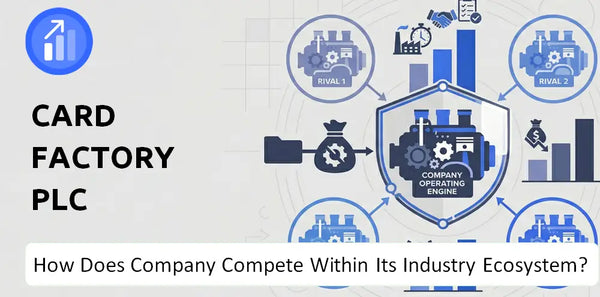
That is why Card Factory Plc Value Chain Analysis matters: it shows where margin and customer access can leak to substitutes. If rivals control convenience, Card Factory Plc must win on price, range, and proximity.
Where Does Card Factory Plc Stand in the Ecosystem?
Card Factory Plc sits in a defensible mid-market spot in UK and Ireland greetings retail. Its Card Factory market position is strongest in value-led, in-store buying, but it still depends on footfall, rent, and repeat occasion traffic rather than hard pricing power.

Card Factory Plc's structural position in greetings retail
Card Factory Plc is a scale value retailer, not a premium brand owner or a pure digital platform. That means its Card Factory brand position is built on store reach, low ticket prices, and fast convenience, especially for birthdays, seasonal events, and last minute gifting.
For the latest view on growth, store economics, and channel mix, see Ecosystem Growth Outlook of Card Factory Plc Company
- Its current role is value-led occasion retail.
- Structural power sits with landlords and footfall.
- The position is protected by scale, but exposed too.
- This matters because rivals can copy price fast.
In FY2025, Card Factory Plc reported revenue of £542.5m and adjusted EBITDA of £66.0m, showing a large operating base but not a moat based on brand pricing. The Card Factory retail store presence in the UK still gives it reach that online-only rivals lack, yet the Card Factory online competition analysis shows that digital gift and card buying keeps widening choice for customers.
The Card Factory competitors set is split across three layers: specialist card chains, supermarkets, and online sellers. Against Clintons, the Card Factory brand position versus Clintons is usually stronger on price and store access, while supermarkets compete on convenience and basket share. Online rivals pressure the Card Factory product range compared to competitors by offering wider design choice, personalisation, and direct delivery.
The main strength is repeat occasion demand. Cards are still bought for fixed events, so Card Factory customer loyalty and brand strength are tied more to habit and proximity than to emotional brand pull. That gives the Card Factory competitive advantage a steady base, but not deep control of the category.
The Card Factory pricing strategy versus rivals remains central to the model. Low prices support volume, but they also cap margin expansion and make the brand easier to imitate. So the Card Factory brand differentiation strategy is practical, not premium: broad store coverage, fast purchase, and value packs.
From a wider Card Factory competitive landscape in greetings retail view, the brand is strong enough to defend share in value cards, but not strong enough to dictate category economics. That is why the Card Factory brand reputation in the UK and Card Factory brand awareness compared to competitors matter, yet still do not convert into full structural control.
Card Factory Plc SWOT Analysis
- Organized to Save Time on Analysis
- Fully Customizable
- Editable in Excel & Word
- Professional Formatting
- Investor-Ready Format

Who Competes With Card Factory Plc for Power in the Same System?
Card Factory Plc competes with supermarkets, discount chains, convenience-led high-street shops, and online card specialists. The real fight is for footfall, price trust, and the right to serve last-minute buyers. Substitutes like e-cards and messaging apps also weaken Card Factory brand position.
 Supermarkets and value retailers set the toughest price fight
Supermarkets and discount retailers compete on convenience, daily footfall, and low prices, which cuts into Card Factory market position in value greeting cards. They also bundle cards with wider basket shopping, so buyers do not need a separate trip. That puts pressure on Card Factory pricing strategy versus rivals and limits impulse sales.
Digital card specialists shape the main substitute threat
Specialist online players such as Moonpig and Funky Pigeon pull demand toward custom cards, home delivery, and a smoother digital buying path. This weakens Card Factory online competition analysis and makes Card Factory brand differentiation strategy harder in younger and time-poor segments. Messaging apps and e-cards also replace part of the need for physical cards.
Card Factory brand strength still sits on access and price. It has a large UK store base, broad product range, and a clear value greeting cards market position, but that does not fully protect it from digital substitution. For a related view on the chain role, see Value Chain Role of Card Factory Plc Company.
Card Factory competitors do not all attack in the same way. Convenience-led high-street outlets win on proximity and last-minute need. Shopping-centre landlords shape where stores can sit and what rent profile Card Factory faces, while delivery networks shape the economics of online fulfillment.
Card Factory brand awareness compared to competitors is strongest when the buyer wants cheap, quick, physical cards. That supports Card Factory retail store presence in the UK and helps its Card Factory customer loyalty and brand strength in routine occasions like birthdays and celebrations. Still, Card Factory brand position versus Clintons and other card specialists depends less on image and more on store reach, price, and range.
The competitive landscape in greetings retail is split into three layers. First are direct rivals in stores. Second are online specialists that pull spend into personalization and delivery. Third are substitutes that remove the category altogether. That is why the Card Factory competitive advantage is real, but narrow: it is strongest in value, convenience, and repeat purchase, not in digital first buying.
- Direct rivals: supermarkets and discount stores
- Channel rivals: convenience-led high street shops
- Online rivals: Moonpig and Funky Pigeon
- Substitutes: e-cards, apps, social posts
- Intermediaries: landlords, platforms, delivery networks
Card Factory market share in greeting cards retail is shaped by store traffic, not only brand image. That makes Card Factory retail branding practical rather than premium. If buyers value speed and low cost, Card Factory brand reputation in the UK stays useful. If they want custom design and direct delivery, the online leaders have the edge.
Card Factory Plc Value Chain Analysis
- Structured to Support Better Decisions
- Effortlessly Communicate Your Business Strategy
- Investor-Ready Format
- 100% Editable and Customizable
- Clear and Structured Layout

What Gives Card Factory Plc an Ecosystem Advantage?
Card Factory Plc's ecosystem advantage comes from controlling both where customers shop and what they can buy, with a broad UK store estate, an online channel, and a value-led offer that fits impulse and planned occasions. That mix strengthens the Card Factory brand position versus Card Factory competitors and supports reach, repeat use, and cross-sell in greetings retail.
| Structural Advantage | How It Helps the Company | Why It Matters |
|---|---|---|
| Route-to-market control | Card Factory Plc sells through stores and e-commerce, so it can serve both last-minute and planned purchases. | This widens access and supports the Card Factory market position across the Card Factory competitive landscape in greetings retail. |
| Value-for-money positioning | Its low-price offer fits everyday card buying, especially when cards are add-ons rather than stand-alone gifts. | This supports Card Factory brand strength where price sensitivity is high and helps the Card Factory pricing strategy versus rivals. |
| Broad range plus in-house execution | Cards, gifts, and party supplies sit together, while in-house design and manufacturing help range control and seasonal speed. | This improves Card Factory product range compared to competitors and gives tighter control in a low-ticket category. |
The strongest structural advantage is route-to-market control. In the Card Factory brand position versus Clintons and other Card Factory competitors, store presence plus online reach gives Card Factory Plc a practical edge in both impulse and planned buying, which is central to Card Factory customer loyalty and brand strength. The linked Ecosystem Principles of Card Factory Plc Company also show why that access model supports Card Factory retail branding and the wider Card Factory market position.
Card Factory Plc Business Model Canvas
- Clean, Modern, and Easy to Present
- No Research Needed – Save Hours of Work
- Built by Experts, Trusted by Consultants
- Instant Download, Ready to Use
- 100% Editable, Fully Customizable

What Does the Competitive Outlook Say About Card Factory Plc's Position?
Over 2025 to 2026, Card Factory Plc is more likely to defend its structural position than to become a category-dominant force. Its Card Factory market position should stay relevant in value gifting, but pressure from supermarkets, online personalization, and digital substitutes limits how far the Card Factory brand position can expand.
Store reach still supports Card Factory brand strength
Card Factory retail store presence in the UK keeps the brand close to high-intent shoppers at the point of need. That helps the Card Factory competitive advantage in last-minute, value-led occasions where timing matters more than premium branding.
The Card Factory brand awareness compared to competitors also stays helped by frequent footfall and simple product choice. Its route-to-market structure is a real asset, as noted in the Route to Market of Card Factory Plc Company.
Digital and shelf pressure cap the upside
Card Factory competitors in supermarkets and online have cut switching costs for buyers. That weakens Card Factory pricing strategy versus rivals and limits the firm's ability to widen its Card Factory market share in greeting cards retail.
Card Factory online competition analysis points to a tougher mix ahead, since personalization, delivery speed, and digital substitutes all pull demand away from store-only purchases. In that setting, Card Factory brand position versus Clintons and other rivals looks more defensive than dominant.
The key question in Card Factory competitive analysis is not whether the brand survives, but whether it keeps enough store productivity and omni-channel execution to defend share. If it does, the Card Factory position in value greeting cards market should remain stable; if not, its role in the Card Factory competitive landscape in greetings retail becomes more niche.
Card Factory Plc VRIO Analysis
- Designed for Fast Business Analysis
- Structured for Consultants, Students, and Founders
- 100% Editable in Microsoft Word & Excel
- Instant Digital Download – Use Immediately
- Compatible with Mac & PC – Fully Unlocked

Related Blogs
- Who Connects Most Strongly With the Brand of Card Factory Plc Company?
- How Could Ecosystem Shifts Change the Growth Outlook of Card Factory Plc Company?
- Who Owns Card Factory Plc Company and How Does Ownership Affect Trust in the Brand?
- What Do the Mission, Vision, and Values of Card Factory Plc Company Say About Its Brand Purpose?
- How Did Card Factory Plc Company Build the Brand It Has Today?
- How Does Card Factory Plc Company Turn Brand Trust Into Sales and Demand?
- How Does Card Factory Plc Company Work and Support Its Brand Promise?
Frequently Asked Questions
Card Factory Plc is a value-led occasion retailer rather than a premium brand owner. Its ecosystem role is to capture high-frequency, low-ticket purchases across birthdays, seasonal events, and last-minute gifting. With around 1,000 stores across the UK and Ireland plus e-commerce, Card Factory Plc competes on availability, convenience, and price rather than exclusivity.
Disclaimer
All information, articles, and product details provided on this website are for general informational and educational purposes only. We do not claim any ownership over, nor do we intend to infringe upon, any trademarks, copyrights, logos, brand names, or other intellectual property mentioned or depicted on this site. Such intellectual property remains the property of its respective owners, and any references here are made solely for identification or informational purposes, without implying any affiliation, endorsement, or partnership.
We make no representations or warranties, express or implied, regarding the accuracy, completeness, or suitability of any content or products presented. Nothing on this website should be construed as legal, tax, investment, financial, medical, or other professional advice. In addition, no part of this site - including articles or product references - constitutes a solicitation, recommendation, endorsement, advertisement, or offer to buy or sell any securities, franchises, or other financial instruments, particularly in jurisdictions where such activity would be unlawful.
All content is of a general nature and may not address the specific circumstances of any individual or entity. It is not a substitute for professional advice or services. Any actions you take based on the information provided here are strictly at your own risk. You accept full responsibility for any decisions or outcomes arising from your use of this website and agree to release us from any liability in connection with your use of, or reliance upon, the content or products found herein.