
Who connects most strongly with ModivCare across payer and provider demand pools?
Demand comes from Medicaid plans, Medicare Advantage sponsors, and provider groups that need transport, home care, and monitoring support. 2025 care-access demand stays tied to contract buy-in, not consumer pull. ModivCare Value Chain Analysis
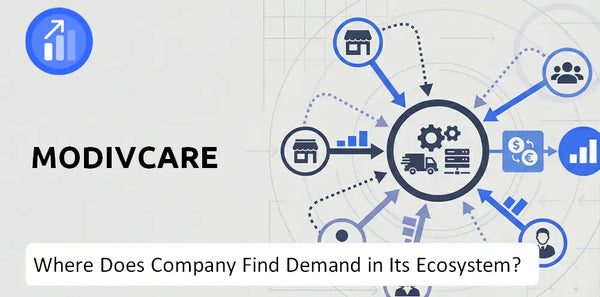
Strongest pull usually comes from managed care buyers and care teams. They need a channel that can turn eligibility into completed visits and lower avoidable gaps in care.
Who Are ModivCare's Core Ecosystem Customers?
ModivCare Company connects most strongly with Medicaid and managed-care buyers that control covered benefits, authorizations, and contract awards. Those payers shape demand for ModivCare healthcare transportation, personal care, and remote monitoring, while members with chronic illness or mobility limits are the end users.

Core buyer group for the ModivCare brand
The main demand pool is public and managed-care payers, especially state Medicaid agencies, Medicaid managed care organizations, Medicare Advantage plans, and dual-eligible plans. They decide who uses ModivCare transportation services, how benefits are set, and how often ModivCare services get paid.
- State Medicaid agencies and managed care plans
- They sit above members in the payment chain
- They value access, control, and cost management
- They drive ModivCare customer base growth
Secondary ecosystem customers that shape demand
Health systems, ACOs, discharge planners, care teams, and home-based care operators also connect with the ModivCare brand. They use Value Chain Role of ModivCare Company to bridge discharge, outpatient visits, and home support for high-need patients.
- Health systems and ACOs need care continuity
- Discharge teams reduce missed follow-up care
- Home-based operators need transport and support
- Buyers seek ModivCare healthcare access solutions
End users versus purchasing decision makers
The end users are members with disability, chronic disease, or transport barriers, including ModivCare Medicaid transportation users and seniors needing recurring visits. But the purchase decision usually sits with the payer or program administrator, so ModivCare brand perception among patients matters less than plan value.
- Users need reliable ride and care access
- Payers want lower friction and fewer gaps
- Plans judge measurable utilization and compliance
- This supports ModivCare managed care partnerships
ModivCare SWOT Analysis
- Organized to Save Time on Analysis
- Fully Customizable
- Editable in Excel & Word
- Professional Formatting
- Investor-Ready Format

What Do ModivCare's Customers Need Within Their Environments?
These customers need dependable access, clean compliance, and tight scheduling inside fragmented local systems. In the ModivCare Company ecosystem, that drives demand for ModivCare healthcare transportation, visit tracking, and care workflows that do not slow down Medicaid and managed-care operations.
 Reliable access across fragmented local markets
Rural ModivCare Medicaid transportation users often face longer trips and fewer ride options, so the channel must support broad coverage and on-time dispatch. Urban members need denser scheduling and faster call-center response because appointment windows are tighter and missed visits are more visible. The need is simple: move the right person at the right time without adding friction.
Why the ModivCare brand fits those workflows
The ModivCare brand matters where transportation, personal care, and documentation must work together under payer rules. Its fit is strongest when ModivCare non-emergency medical transportation, caregiver scheduling, and state-specific authorization steps all support one repeatable workflow. That is why this ModivCare ecosystem article maps closely to who connects most strongly with the ModivCare brand.
High-need groups like dialysis, behavioral health, oncology, post-acute, and dual-eligible members need repeated support, not one-off trips. For ModivCare patient transportation services and ModivCare social care services, the key requirement is synchronized visits, reliable documentation, and fewer handoff errors. ModivCare healthcare support for vulnerable populations works best when it fits state Medicaid rules, managed-care oversight, and caregiver supply limits in the local market.
Care intensity also changes the operating model. Personal care demand depends on caregiver recruitment, visit reliability, and proof of service that satisfies review teams, while transportation demand depends on wheelchair-capable capacity, dispatch discipline, and call-center responsiveness. The ModivCare customer base values service that keeps appointments intact and reduces admin work for plans, providers, and members.
ModivCare Value Chain Analysis
- Structured to Support Better Decisions
- Effortlessly Communicate Your Business Strategy
- Investor-Ready Format
- 100% Editable and Customizable
- Clear and Structured Layout

Where Does ModivCare Find Demand Across Channels, Verticals, or Regions?
ModivCare Company finds the strongest demand in Medicaid and managed-care channels, where ModivCare healthcare transportation, home-based support, and remote monitoring can lower avoidable cost. The ModivCare brand connects most with payers and providers, not end users, because ModivCare managed care partnerships drive who uses ModivCare transportation services and related care coordination.
| Channel, Vertical, or Region | Why Demand Is Strong There | Why It Matters |
|---|---|---|
| Medicaid and managed care | Plans need ModivCare non-emergency medical transportation, personal care, and monitoring to support members with frequent visits, chronic needs, and post-discharge follow-up. | This is the core ModivCare customer base and the main source of recurring utilization. |
| Home- and community-based services | Demand rises when states and plans expand in-home support for aging adults, disabled members, and other vulnerable groups. | It supports ModivCare social care services and strengthens retention inside payer workflows. |
| Large Medicaid, rural, and aging regions | Need is highest where access gaps, provider shortages, and long travel times make ModivCare patient transportation services more valuable. | These markets show the clearest use case for ModivCare healthcare access solutions and ModivCare non emergency transportation for seniors. |
The most important demand pool appears to be Medicaid and managed care, because that is where who is the target audience for ModivCare Company becomes clearest: health plans that need lower total cost of care and better access control. The ModivCare value proposition for health plans is strongest when transportation, discharge support, and remote patient monitoring can reduce avoidable emergency visits and missed care, which is also where the Industry History of ModivCare Company shows the brand has stayed most embedded. That is why ModivCare customer segments are shaped more by payer operations than by ModivCare brand perception among patients.
ModivCare Business Model Canvas
- Clean, Modern, and Easy to Present
- No Research Needed – Save Hours of Work
- Built by Experts, Trusted by Consultants
- Instant Download, Ready to Use
- 100% Editable, Fully Customizable

How Does ModivCare Expand and Retain Its Role in the Demand System?
ModivCare Company expands its role by linking ModivCare healthcare transportation, in-home support, and monitoring into one workflow for payers and members. That makes the ModivCare brand harder to replace, because a buyer would need to reset dispatch, eligibility, reporting, and member support across the whole care path.
Strongest retention mechanism is workflow depth
ModivCare services stay sticky when they sit inside daily care operations, not just a contract. The Ecosystem Ownership of ModivCare Company shows why service reliability, compliance, and member support matter most for retention.
For the ModivCare customer base, the main lock-in comes from managed care partnerships that rely on one vendor for ModivCare patient transportation services and related support.
Next expansion opening is more home-based care
ModivCare brand growth can come from more care moving into the home, where ModivCare social care services and monitoring can connect with rides and follow-up support. That widens who uses ModivCare transportation services and who connects most strongly with the ModivCare brand.
Its best opening is deeper ModivCare healthcare access solutions for Medicaid transportation users, seniors, and other vulnerable groups that need low-friction care access.
ModivCare VRIO Analysis
- Designed for Fast Business Analysis
- Structured for Consultants, Students, and Founders
- 100% Editable in Microsoft Word & Excel
- Instant Digital Download – Use Immediately
- Compatible with Mac & PC – Fully Unlocked

Related Blogs
- How Strong Is ModivCare Company’s Brand Position Against Competitors?
- How Could Ecosystem Shifts Change the Growth Outlook of ModivCare Company?
- Who Owns ModivCare Company and How Does Ownership Affect Trust in the Brand?
- What Do the Mission, Vision, and Values of ModivCare Company Say About Its Brand Purpose?
- How Did ModivCare Company Build the Brand It Has Today?
- How Does ModivCare Company Turn Brand Trust Into Sales and Demand?
- How Does ModivCare Company Work and Support Its Brand Promise?
Frequently Asked Questions
State Medicaid agencies and managed care plans matter most. ModivCare sells across 3 core service lines-NEMT, personal care, and remote patient monitoring-and the real buying authority sits with public programs and risk-bearing plans. The end users are members with recurring access barriers, but the contract owner is usually the payer, not the patient.
Disclaimer
All information, articles, and product details provided on this website are for general informational and educational purposes only. We do not claim any ownership over, nor do we intend to infringe upon, any trademarks, copyrights, logos, brand names, or other intellectual property mentioned or depicted on this site. Such intellectual property remains the property of its respective owners, and any references here are made solely for identification or informational purposes, without implying any affiliation, endorsement, or partnership.
We make no representations or warranties, express or implied, regarding the accuracy, completeness, or suitability of any content or products presented. Nothing on this website should be construed as legal, tax, investment, financial, medical, or other professional advice. In addition, no part of this site - including articles or product references - constitutes a solicitation, recommendation, endorsement, advertisement, or offer to buy or sell any securities, franchises, or other financial instruments, particularly in jurisdictions where such activity would be unlawful.
All content is of a general nature and may not address the specific circumstances of any individual or entity. It is not a substitute for professional advice or services. Any actions you take based on the information provided here are strictly at your own risk. You accept full responsibility for any decisions or outcomes arising from your use of this website and agree to release us from any liability in connection with your use of, or reliance upon, the content or products found herein.